Healthcare time and attendance FAQs
What NHS trusts, independent hospitals and care providers ask. If yours is not here, call the Leeds team on 0113 350 9043.
What time and attendance software suits NHS and healthcare providers?▼
The requirements that matter in healthcare are different from most sectors. It has to handle shifts that cross midnight, long days, night and weekend premiums and unsocial hours rules without manual calculation. It has to record permanent, bank and agency staff separately, because they are paid differently and reported on differently. It has to work across sites where somebody covers two locations in a week. And it needs to cope with people arriving in PPE, which rules out some clocking methods. Anything meeting those four is worth looking at; plenty of general workforce platforms manage two.
Does this handle rostering and safe staffing levels?▼
No, and this is the most important thing to be clear about. Deciding how many staff a ward needs, with what skill mix, for what acuity, is a clinical and regulatory judgement supported by e-rostering systems. We do not do that and would not claim to. What we record is what actually happened afterwards: who came in, when, on which arrangement. Those are different things, and the rostered position and the actual one are rarely identical, which is precisely why the second is worth recording.
Will it reduce our agency spend?▼
Not directly, and anyone promising that should be asked how. Reducing agency use means filling shifts differently, which is a bank management and rostering problem. What we do is make the spend visible: bank, agency and contracted hours recorded separately, by ward and by month, so you can see where it is going while there is still something to be done about it rather than discovering the total at year end.
How do you handle permanent, bank and agency staff together?▼
All three in one system, recorded separately so their hours can be treated and reported differently. Somebody on the bank who works two shifts a month is set up once rather than each time, and agency staff can be given access that expires with the placement so nobody keeps a working credential after their last shift. The reporting distinguishes them, which is what makes the cost visible.
Which clocking method works in a clinical setting?▼
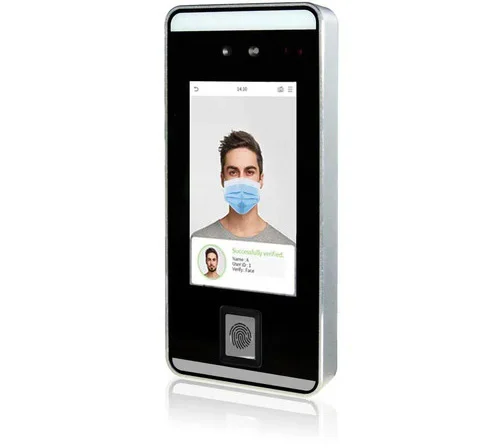
Contactless, usually. Fingerprint means a shared surface at the door and staff who have just gelled their hands, so
facial recognition or
palm suits better, and palm has the advantage of working when a face is covered. Cards remain the simplest option and the one you need for visitors and contractors anyway. We will go through it with you rather than assume.
Does it do DBS checks or professional registration?▼
No. DBS checking, NMC or GMC registration and revalidation, mandatory training records and appraisals belong in an HR or workforce compliance system. If you run Realtime, its HR module holds employee records and documents, but it does not check anything against a register on your behalf. Recording attendance and verifying somebody’s professional standing are separate jobs, and we do the first.
Can staff cover more than one site?▼
Yes, with one record and one credential rather than a separate setup at each location. Hours report by site, ward or department, and a manager can be given oversight of their own area rather than the whole organisation. For a trust or group running several sites, that single record is usually more valuable than any individual feature.
Are you on an NHS procurement framework?▼
We are an independent UK supplier working with NHS organisations, independent hospitals and care providers, and we are not going to imply an approval or accreditation we do not hold. If framework procurement matters for how you buy, tell us early and we will be straight with you about what is possible rather than finding out at the wrong stage.
Where is the data held?▼
In UK data centres, with access logged and restricted to named users, or on your own server if you run
Realtime on site. Attendance records are personal data, and biometric templates are special category data, so if you are considering biometrics there is consent and an impact assessment to plan for. Our
data security page sets out the detail.
Can we account for everyone in an evacuation?▼
For staff and signed-in visitors and contractors, yes, through
fire roll call, which builds the list from the clockings and puts it on a marshal’s phone. Patients are a different matter entirely and are handled by your own evacuation procedures rather than by any workforce system.
How much does it cost?▼
£2 per employee per month excl. VAT for the software, or £3 with the mobile app for community and visiting staff. Terminals from £395 excl. VAT one off. Priced per person rather than per site, so a group with six locations pays the same as one with two. Larger installations are quoted, and
Realtime is priced separately.
How long does it take to put in?▼
Days for the software, plus installation time for terminals. The work is in the rules: shift patterns, long days, night and weekend premiums, how bank and agency hours are treated, what happens when somebody stays past the end of a shift. That is a conversation with whoever runs your payroll and rostering, and it is worth doing properly, because healthcare pay rules are more intricate than most and rules set wrongly produce figures that look plausible and are not.