Logistics

Workforce management for logistics and warehousing

Logistics has two workforces in one business. Depot and warehouse staff work shifts and pass a door every morning. Drivers and yard crews do not. Most systems handle one of those well and the other badly.

Ours does both. A terminal at the depot entrance for the people who walk past it, the mobile app for the people who do not, and both landing on one timesheet and one payroll export. The same credential can open the doors through access control.

From £2 per employee per month excl. VAT · Terminals from £395 · Free trial, no card required

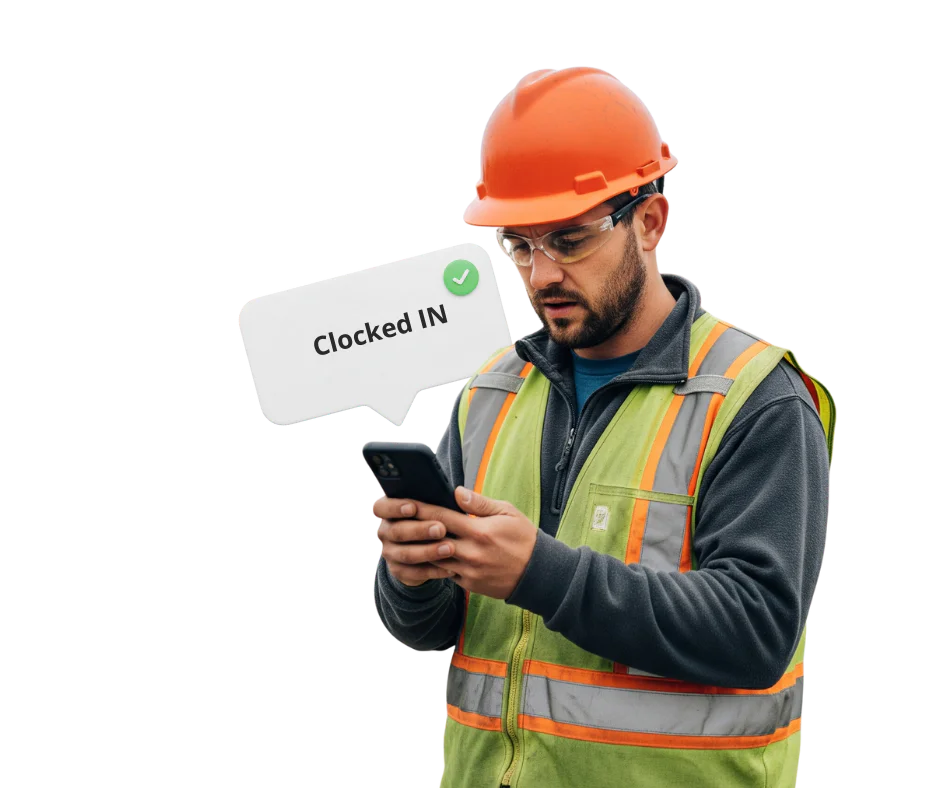
Logistics worker clocking in on the Computime mobile app, showing a clocked in confirmation

The problems that come with the sector

Most of these are not solved by working harder at the spreadsheet. They come from having two kinds of workforce, a lot of turnover and sites that never stop.

Two workforces, one payroll

Warehouse staff on shifts and drivers who are never at the depot when the timesheets go round. Usually recorded two different ways and reconciled by somebody on a Monday.

Agency staff arriving on Monday

Twenty temporary workers for peak, gone by January, each needing setting up and taking off again. The admin around turnover is often bigger than the clocking itself.

Who can reach the high value stock

Restricting an area is straightforward. Knowing afterwards who went in, and when, is the part that needs a system rather than a key.

Hours that arrive late and wrong

Drivers, warehouse and shift staff on different arrangements, all needing to be right by the same payroll cut-off.

Who is in the building right now

On a site with vehicles moving and a lot of agency faces, the answer needs to be better than a headcount taken by somebody who does not know everyone.

Records for the customer audit

For warehouses and distribution centres

Three things that change once the hours are recorded rather than collected.

Hours without the chasing

Shift patterns, night and weekend premiums and overtime rules applied to the recorded clockings, across every depot, with nothing collected by hand. See time and attendance.

Staff answering their own questions

Through the mobile app, people request holiday, check what they have left and see their own hours, which takes a good number of queries off a shift manager. See absence management.

Who is in the building

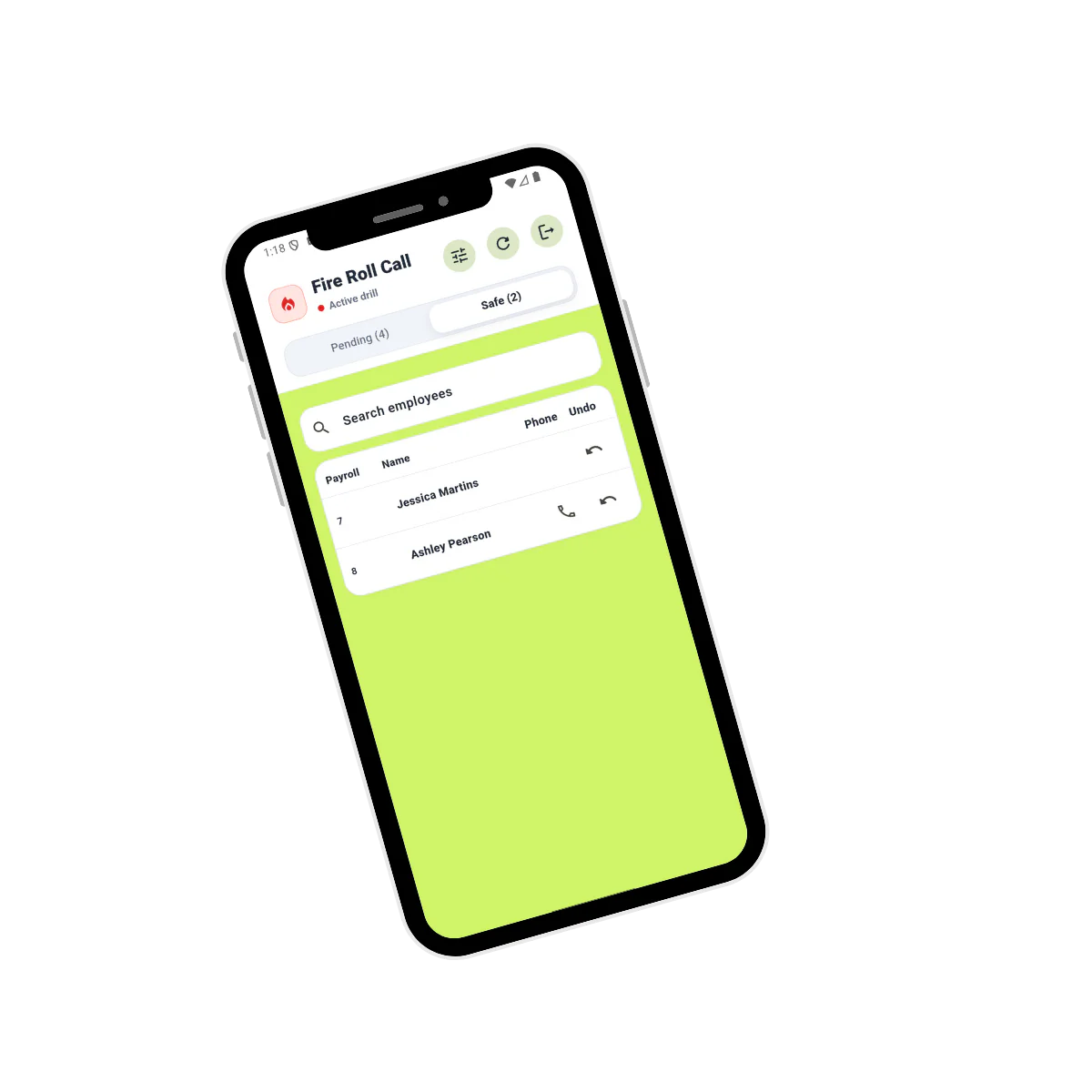
A live list of everyone who has clocked in and not out, including agency staff who nobody would recognise by name. That same list is what the fire roll call uses at the assembly point.

Drivers, hauliers and contractors at the gate

A depot has more people through it than almost any other kind of site. Delivery drivers, third party hauliers, engineers, agency staff, and most of them are not on your payroll and will not be there tomorrow.

Our visitor management puts them on the same record as your staff:

  • Regular hauliers pre-registered and checked in by QR code
  • Site rules and PPE requirements confirmed at sign in, and recorded
  • A searchable record of who was on site, rather than a book on the gatehouse desk
  • Contractor access that expires, so nobody keeps working entry after the job

Everyone signed in appears on the fire roll call. On a site where a driver could be anywhere between the gate and a loading bay, that is the difference between accounting for everyone and hoping.

Access control for depots and warehouses

Valuable stock, restricted areas and a lot of people who are not permanent staff. Access control sorts out who can be where, and leaves a record of who was.

Controlling the site

  • Restrict areas to the people who need them, by role and by time of day
  • Every use of a controlled door recorded, including refused attempts
  • A leaver’s access removed the same afternoon, without changing a lock
  • An audit trail if you ever need to establish who went where

How it fits together

  • Cards, fobs or biometrics, whichever suits the door and the workforce
  • Permissions set by role, shift or location
  • The same badge clocks people in, so entry and attendance are one event
  • Every depot managed from one place, with one credential per person
Computime fire roll call screen showing staff confirmed safe during a logistics site evacuation

Fire roll call and emergency mustering

A distribution centre at two in the afternoon has warehouse staff, agency workers, drivers who arrived twenty minutes ago and an engineer somewhere in the plant room. Working out who should be at the assembly point from memory is not realistic. Our fire roll call builds the list from the clockings.

  • Everyone clocked in and not out, on a marshal’s phone at the assembly point
  • Signed-in drivers and contractors on the same list as staff
  • Anyone not yet accounted for flagged, and callable from the app
  • A record of every drill, which is what your fire risk assessment expects you to have

No roll call system knows about somebody who walked out of a side gate without clocking, and any supplier claiming otherwise is overselling. What it does is turn a headcount into a list, and give you a way to ring the two people who are not standing there.

UK logistics runs on its workforce

It is a sector that runs on thin margins and a great many people, a good number of whom are agency, temporary or somebody else’s driver. Getting the hours right is not a back office concern.

£170bn

generated for the UK economy by the logistics sector

Logistics UK, 2025

8%+

of the UK workforce employed in logistics

Logistics UK, 2025

What this is not

Logistics buyers ask about three things we do not do, and it saves everyone a demo if we say so here.

Tachographs and drivers’ hours

Drivers’ hours under GB and EU rules are a separate regulated regime with its own recording requirements, and it is handled by tachograph analysis software. We record attendance, not driving time, and we would not suggest our records satisfy that obligation.

Transport and warehouse management

Route planning, load allocation, stock and pick rates belong in a TMS or WMS. Plenty of our customers run one alongside us. What we handle is the people rather than the goods.

Vehicle tracking

Following a vehicle through the day is telematics, and a different kind of supplier. Our GPS records a location at the moment somebody clocks and at no other point.

What we do handle

Hours, shifts, absence, access and roll call, for warehouse staff and drivers alike, feeding one payroll export. If that is the gap, it is worth a conversation. If it is not, we will say so.

What our customers say

“

We are really pleased with our Computime solution. Introducing this system means that payroll is now processed accurately and efficiently, helping to boost morale both for our head office staff and our field teams. Real time data means we know where our employees are, allowing us to operate more efficiently.

James Dunlop

Financial Manager, Landworth Electrics

“

We are very pleased with the smooth implementation. Computime worked very hard to make sure installation was completed within the time frame and with minimum disruption. The in-depth training allowed us to focus on production and keeping our employees safe at work while ensuring efficiency.

Clare Barker

HR Manager, Wholebake Limited

“

I was tasked with sourcing a computerised time and attendance solution to replace our manual clocking system. The Computime website contained all the information I needed, making the decision straightforward. The software proved easy to use and the helpdesk was very helpful and friendly. Computime have exceeded all of our expectations and objectives. I would definitely recommend them.

Purchasing Manager

BSK Laminating

Why choose Computime?

For over 35 years, since 1989, we have supplied both the terminals and the software behind them. In logistics that matters more than it sounds, because you need a reader at the depot door and an app in a driver’s pocket, and most suppliers only do one.

Both halves land in the same records and the same payroll export, with exports for Sage, Pegasus and QuickBooks and direct Sage integration on Realtime.

Built and supported by our own team in Leeds, with no minimum headcount and room to scale to 5,000 employees. When you call, you speak to someone here.

800+

UK businesses trust Computime systems

35+

years of UK workforce experience since 1989

4.5

average from 41 Google reviews

UK

based support team on hand when you need them

Logistics workforce management FAQs

What operators ask before changing a system. If yours is not here, call the Leeds team on 0113 350 9043.

Does this handle drivers’ hours and tachograph rules?
No, and it is important to be clear about that. Drivers’ hours under GB and EU rules are a separate regulated regime with their own recording requirements, met through tachographs and tachograph analysis software. What we record is attendance: when somebody started and finished, and what they should be paid. The two things sit alongside each other and most operators run both. Any workforce supplier suggesting their system covers drivers’ hours compliance is worth questioning closely.
How do you handle warehouse staff and drivers in one system?
Different clocking methods, one set of records. Warehouse and depot staff clock at a terminal on their way in, drivers use the app from wherever they are, and both feed the same timesheet and the same payroll export. That is usually the thing operators are trying to solve, because running two systems means somebody reconciles them every week.
Can we set up agency and temporary staff quickly?
Yes, and in logistics that is often the deciding factor rather than the clocking itself. Adding somebody takes a minute, a card takes seconds to issue and seconds to cancel, and access can be set to expire on a date so nobody keeps a working credential after their last shift. Peak intakes of twenty or thirty people are routine rather than a problem.
Is it a warehouse management system?
No. Stock, picking, put-away, pick rates and load planning all belong in a WMS or TMS, and those systems do them properly. We handle the people: hours, shifts, absence, access and roll call. Plenty of customers run us alongside a warehouse system, and if a WMS is what you are actually looking for we will tell you that rather than take you through a demo first.
Does it work across several depots?
Yes, on one system with access restricted by site, so a depot manager sees their own people rather than everyone in the group. Somebody who covers two sites carries one credential rather than one for each, and hours report by site, department or cost centre. Pricing is per person rather than per site, which matters if you run more than a couple.
Which clocking method suits a depot?
Cards or fobs work well and are simple to issue to agency staff, which is why most depots start there. Biometrics tie the clocking to the person, which some operators want where turnover is high, though it brings consent obligations that cards do not. Facial recognition tends to suit better than fingerprint if people arrive in gloves or handling goods all day.
What about drivers with no signal?
The app works offline and uploads when signal returns, so a clocking made in a lay-by with no coverage is not lost. Location is recorded at the moment of clocking and at no other point, so this is not vehicle tracking and would not do the job if that is what you want.
Can we account for drivers and visitors in an evacuation?
Yes, provided they signed in. Anyone recorded through visitor management appears on the fire roll call alongside staff. On a depot that is the group most likely to be missed, since a third party driver is nobody’s direct report and may have arrived twenty minutes ago.
How much does it cost?
£2 per employee per month excl. VAT for the software, or £3 with the mobile app for drivers and anyone off site. Terminals from £395 excl. VAT one off. Charged per person rather than per site, so a group with six depots pays the same as one with two.
How long does it take to put in?
The app side runs in days. Terminals need installing, which is a visit rather than a project. The work is agreeing your rules: shift patterns, night and weekend premiums, when overtime starts, how agency hours are handled. That is a conversation with whoever runs your payroll and it is worth doing carefully.
Left Menu Icon