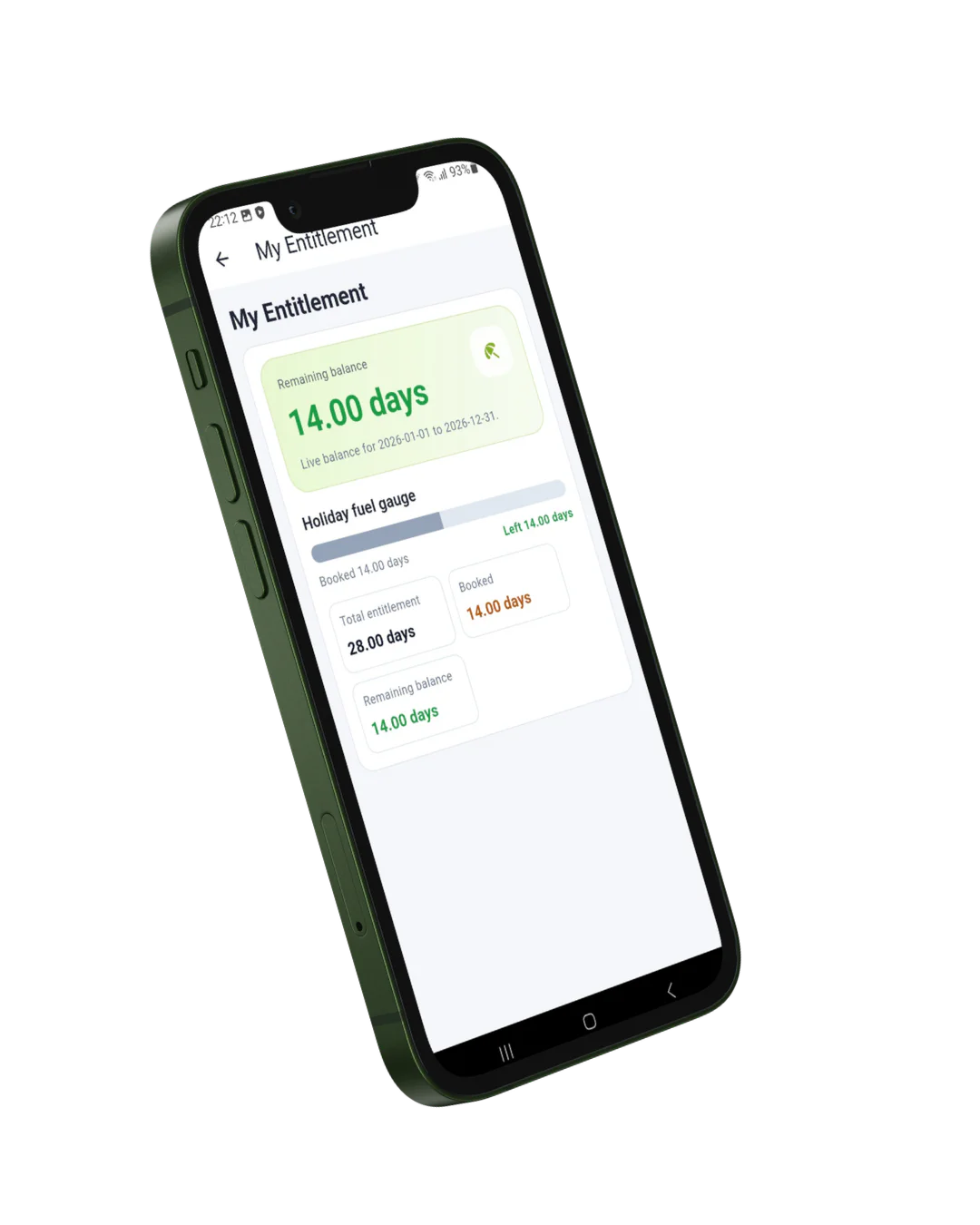
Syncro Connect app showing a hospitality employee's holiday entitlement balance

The hours hospitality actually works

Most systems assume a shift starts in the morning and finishes in the afternoon. Hospitality does not work like that, and the gap between what the system expects and what your staff do is where the errors come from.

  • Split shifts recorded as two attendances in one day, not one long one
  • Shifts that finish after midnight attributed to the right day
  • Staff working across two or three venues on one record
  • The half hour after close, recorded rather than argued about
  • Lateness and absence patterns, with Bradford Factor scoring
  • Hours to payroll without anyone typing them up on a Monday

None of that is exotic. It is just what hospitality does every week, and a system that handles it stops being something managers work around.

What changes once it is in

Putting time and attendance and access control on one record changes five specific things, usually within a couple of pay runs.

You know what a shift cost you before the month ends, not after
Somebody not turning up is visible at six, not at half past seven
Nobody spends Monday morning working out what everyone did
Disagreements about hours are settled by looking rather than arguing
A new starter is set up in a minute rather than added to a list for later

What this is not

Hospitality operators ask about four things we do not do. Better to say so here than halfway through a demo.

Payroll itself

We are not a payroll bureau and do not produce payslips, calculate tax or make RTI submissions. We record the hours and hand them to your payroll, whoever runs it.

Tips, tronc and service charge

Distributing service charge is a tronc arrangement with its own rules and usually its own troncmaster. We record hours worked, which is often what a tronc allocation is based on, but we do not run the scheme.

EPOS and booking systems

Tills, covers, table management and stock belong in your EPOS. If you want labour hours against covers by service, that means putting our figures next to theirs rather than an integration between the two.

Deciding your staffing

How many people a Saturday needs is a judgement made by somebody who knows the venue. We tell you what it actually took, which is what makes the next judgement better.

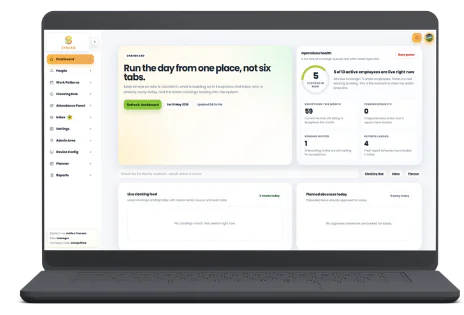
Syncro Connect time and attendance dashboard showing live staff attendance across a hospitality business

One set of records, not four

Attendance, scheduling, visitors and access control on the same staff record, exporting to whatever payroll package you already run.

The alternative is what most venues have: a rota in a spreadsheet, hours in a book behind the bar, a visitor pad at the door and a set of keys nobody can account for. Each one maintained separately and none of them agreeing.

Cellars, stockrooms and the office

Hospitality has a turnover problem and a key problem, and they are the same problem. Every leaver who does not hand a key back is a lock you either change or worry about. Access control on the same staff record means:

  • Stockrooms, cellars and cash offices restricted to the people who need them
  • Permissions by role, so a new bar back does not get the office by default
  • A leaver removed in one place rather than two, on the day they leave
  • A record of who opened what and when, if a question ever comes up

In a venue where a third of the team turns over in a year, the difference between cancelling a credential and changing a lock adds up.

Whether you run one venue or twenty

The problems are the same shape at both ends, they just cost more at the larger one.

A single pub or restaurant

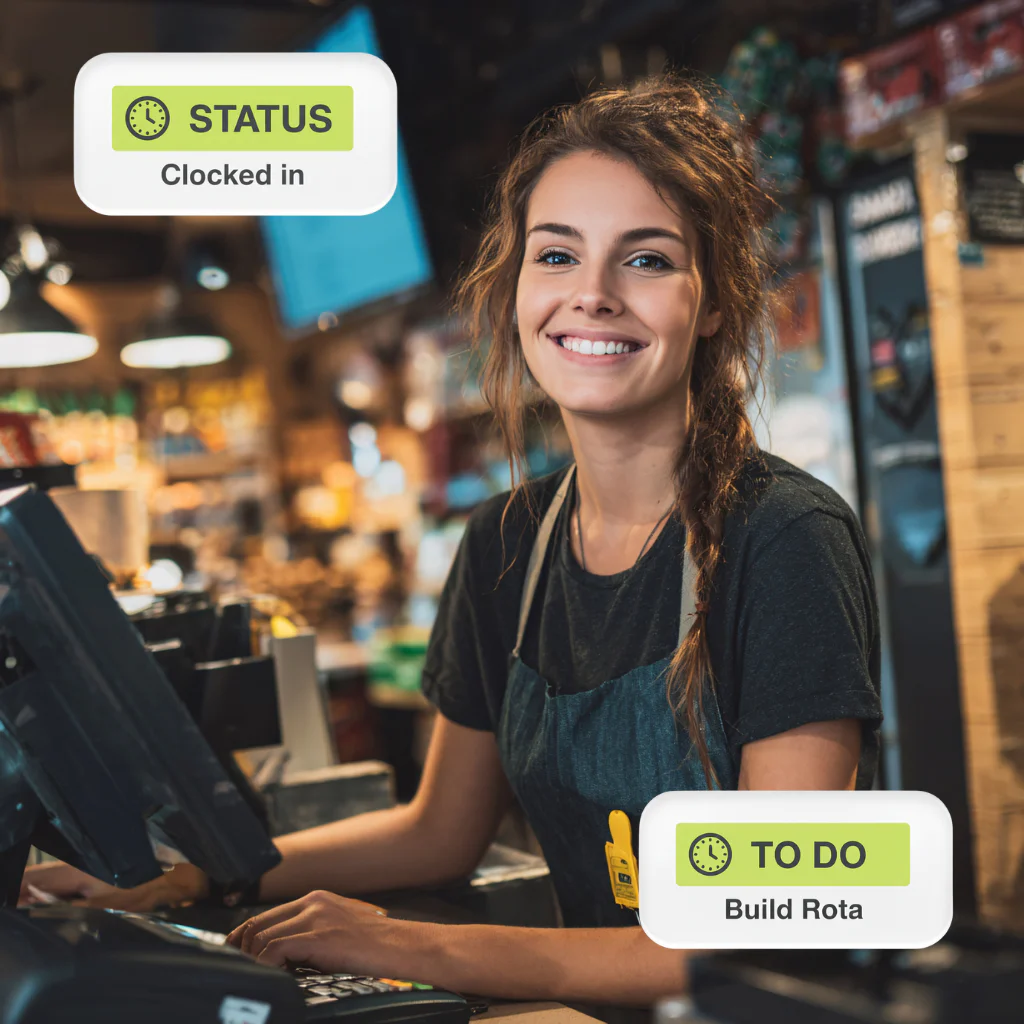
No hardware needed. Staff clock on the app, the manager sees the week without keeping a book, and payroll gets a file instead of a photograph of a page.

A hotel

Housekeeping, kitchen, front of house and nights, all on different patterns, with a terminal by the staff entrance and one set of hours at the end of it.

A group of venues

Somebody working across three sites carries one record, and head office sees every venue without ringing round on a Saturday.

Seasonal and casual staff

Set up in a minute, removed as quickly, and a credential that can be set to expire so nobody still has cellar access in March.

Priced per person, not per venue

Four small sites cost the same as one big one with the same headcount, which is not how everybody in this market charges.

Somebody in Leeds to ring

A UK company, on the phone during your working day, which matters when a terminal stops working at five on a Friday.

The practical questions

The things operators ask once they have decided the idea is sound.

How long to get a new starter clocking?

About a minute. In a sector where somebody might start on Thursday and work Friday, that matters more than most features.

Do we need a terminal in every venue?

No. Staff can clock on the app or in a browser. A terminal makes sense where a shift starts all at once or where you would rather not rely on personal phones.

What about someone finishing at 1am?

Attributed to the shift they started, not split across two days. Sounds obvious, and it is where plenty of general systems get hospitality wrong.

Somebody who works at two of our sites?

One record, one credential, hours reported by venue. Not two people in the system who happen to share a name.

What happens when the wifi drops?

Clockings are held and sync when it comes back. Nobody stands at the door with a notepad and nothing is lost.

Can we try it in one venue first?

Yes, and for a group that is the sensible way in. Run one site on a free trial, see whether the team takes to it, then decide.

Why choose Computime?

For over 35 years, since 1989, we have recorded what UK workforces actually work. Hospitality is the hardest version of that job, which is why the split shifts and the one in the morning finishes are handled properly rather than worked around.

We make the terminals as well as the software, so a hotel can have a reader by the staff entrance and a small pub can use nothing but the app, without dealing with two suppliers. Hours export for Sage, Pegasus and QuickBooks, with direct Sage integration on Realtime.

Built and supported by our own team in Leeds, with no minimum headcount and room to scale to 5,000 employees. When you call, you speak to someone here.

800+

UK businesses trust Computime systems

35+

years of UK workforce experience since 1989

4.5

average from 41 Google reviews

UK

based support team on hand when you need them

Hospitality is one of the UK’s biggest employers

It is also a sector of small businesses, where the person sorting out the hours is usually the person who also runs the place. That is worth remembering when a supplier proposes a six month implementation.

97.7%

of UK hospitality businesses are small businesses

House of Commons Library

3.6m

people work in UK hospitality, the third largest employer in the country

UKHospitality

£96bn

contributed to the UK economy by hospitality each year

UKHospitality

Case studies

See how UK businesses use Computime to manage their workforce.

We are really pleased with our Computime solution. Introducing this system means that payroll is now processed accurately and efficiently, helping to boost morale both for our head office staff and our field teams. Real time data means we know where our employees are, allowing us to operate more efficiently.

James Dunlop

Financial Manager, Landworth Electrics

Read case study →

We are very pleased with the smooth implementation. Computime worked very hard to make sure installation was completed within the time frame and with minimum disruption. The in-depth training allowed us to focus on production and keeping our employees safe at work while ensuring efficiency.

Clare Barker

HR Manager, Wholebake Limited

Read case study →

I was tasked with sourcing a computerised time and attendance solution to replace our manual clocking system. The Computime website contained all the information I needed, making the decision straightforward. The software proved easy to use and the helpdesk was very helpful and friendly. Computime have exceeded all of our expectations and objectives. I would definitely recommend them.

Purchasing Manager

BSK Laminating

Hospitality workforce management FAQs

What operators ask before changing how they record hours. If yours is not here, call the Leeds team on 0113 350 9043.

How does it handle split shifts?
As two separate attendances in one day rather than one long shift with a five hour break in the middle. That sounds like a detail and it is the thing that decides whether a system works in a restaurant. Anything built around an office day will either pay somebody for the afternoon they spent at home or need a manager to correct it every week.
What about shifts that finish after midnight?
The hours belong to the shift somebody started, not split across two dates because the clock passed twelve. It is worth asking any supplier this directly, because it is a common source of quiet errors and it shows up in every hospitality business every weekend.
Can staff work across more than one venue?
Yes, on one record and one credential, with hours reported by venue. That matters for a group, because the alternative is somebody existing twice in the system and their weekly hours being calculated separately in each, which is how people end up unintentionally over their contracted hours or under their minimum wage.
Do you handle tips, tronc or service charge?
No. Distributing service charge is a tronc arrangement with its own rules and usually its own troncmaster, and it sits outside what we do. What we can give you is the hours worked per person per venue, which is what most tronc allocations are calculated from, but the scheme itself is yours or your accountant’s.
Do we need hardware in every venue?
No. Staff can clock on the app on their own phone or in a browser on the office computer. A terminal is worth having where a whole shift starts at once, or where you would rather clocking did not depend on personal phones. Plenty of groups run terminals in the larger sites and the app everywhere else.
Does it connect to our EPOS?
Not directly. Covers, sales, table management and stock belong in your EPOS and it will do them better than a workforce supplier would. If you want labour hours set against covers or sales by service, that comes from putting the two sets of figures side by side rather than from an integration, and it is worth knowing that before you buy rather than after.
How quickly can we add a new starter?
A minute, which in hospitality is the right answer. Somebody who starts on a Thursday and works Friday cannot wait for a setup process, and a system that makes that awkward gets bypassed on the first busy weekend. Removing a leaver is quicker still, and a card can be set to stop working on a date.
Will the team actually use it?
Usually, and more readily than managers expect, because hospitality staff have a direct interest in accurate hours. The twenty minutes after close and the extra shift picked up at short notice are exactly what gets forgotten when hours are written up later. Where it fails is when clocking is slow or when nobody explained why it appeared.
Does it cost more per venue?
No. £2 per employee per month excl. VAT, or £3 with the app, regardless of how many sites they are spread across. Per-location pricing is common in this market and it penalises groups of small venues, which is most of hospitality, so it is worth asking anyone you speak to.
Are you a payroll provider?
No. We do not produce payslips, calculate tax or make submissions to HMRC. We record the hours and export them for Sage, Pegasus and QuickBooks, or hand them to whoever runs your payroll. If it is a payroll bureau you are looking for, we are not it and will say so early.
What happens when the wifi drops mid-service?
Clockings are held and upload when the connection returns, on both the app and the terminals. Nothing is lost, nobody stands at the door with a notepad, and it is not something anyone has to think about at the time.
Can we try it in one site before rolling it out?
Yes, and for a group it is the sensible way in. Run one venue on a free trial, see how the team takes to it through a busy weekend, and decide from there. A system that survives a Saturday night is a system that will survive the rest.
Start A Conversation

Left Menu Icon