Absence management software FAQs
What UK employers ask about managing absence. If yours is not here, call the Leeds team on 0113 350 9043.
What is absence management software?▼
Absence management software is a system that records and reports on employee time off, covering both planned absence like holiday and unplanned absence like sickness. It calculates entitlements, handles requests and approvals, tracks sickness patterns, produces reports for HR and payroll, and keeps an auditable record of who was off, when and why. It replaces the spreadsheets, wall planners and email chains most businesses start with.
What is a good Bradford Factor score?▼
There is no official threshold, because the
Bradford Factor is a tool rather than a standard. Employers commonly set their own trigger points, often somewhere between 50 and 200 over a rolling twelve months, with escalating responses as the score rises. What matters more than the number is what you do with it: a score is a prompt to have a conversation, not evidence of anything on its own, and a high score can reflect a disability or chronic condition as easily as a pattern that needs addressing.
What absence records must UK employers keep?▼
You need records adequate to show you have met your obligations: hours worked and rest taken under the Working Time Regulations, holiday taken and entitlement remaining, and enough detail to evidence statutory sick pay if HMRC asks. Sickness records are health data, which is special category data under UK GDPR, so they need a lawful basis, a retention period and restricted access. Keeping them in a system rather than a drawer makes all three easier to demonstrate.
How is holiday entitlement calculated for part time staff?▼
Pro rata, based on days or hours worked. Someone working three days a week gets three fifths of the full time entitlement, and the statutory minimum in the UK is 5.6 weeks including bank holidays. It gets harder with irregular hours, term-time working and mid-year starters, which is where spreadsheets usually start producing wrong answers. The software applies your rules automatically, and
gov.uk publishes a calculator if you want to sense-check a figure.
How do we track statutory sick pay?▼
The system records the start and end of every sickness spell and the qualifying days within it, which is the information SSP is calculated from, and that flows into your payroll export rather than being worked out by hand. Rates and eligibility rules change each April, so check the current figures on
gov.uk. What the software gives you is an accurate record of the absence itself, which is the part employers most often get wrong.
Can absence management software reduce absenteeism?▼
Not by itself, and we would be wary of any supplier who says otherwise. What it does is make absence visible: patterns show up early rather than at year end, return to work conversations happen consistently rather than when someone remembers, and you can see what absence is actually costing. Whether that reduces absence depends on what you do next. Most of the improvement our customers see comes from acting sooner, not from the software itself.
What does absence management software cost in the UK?▼
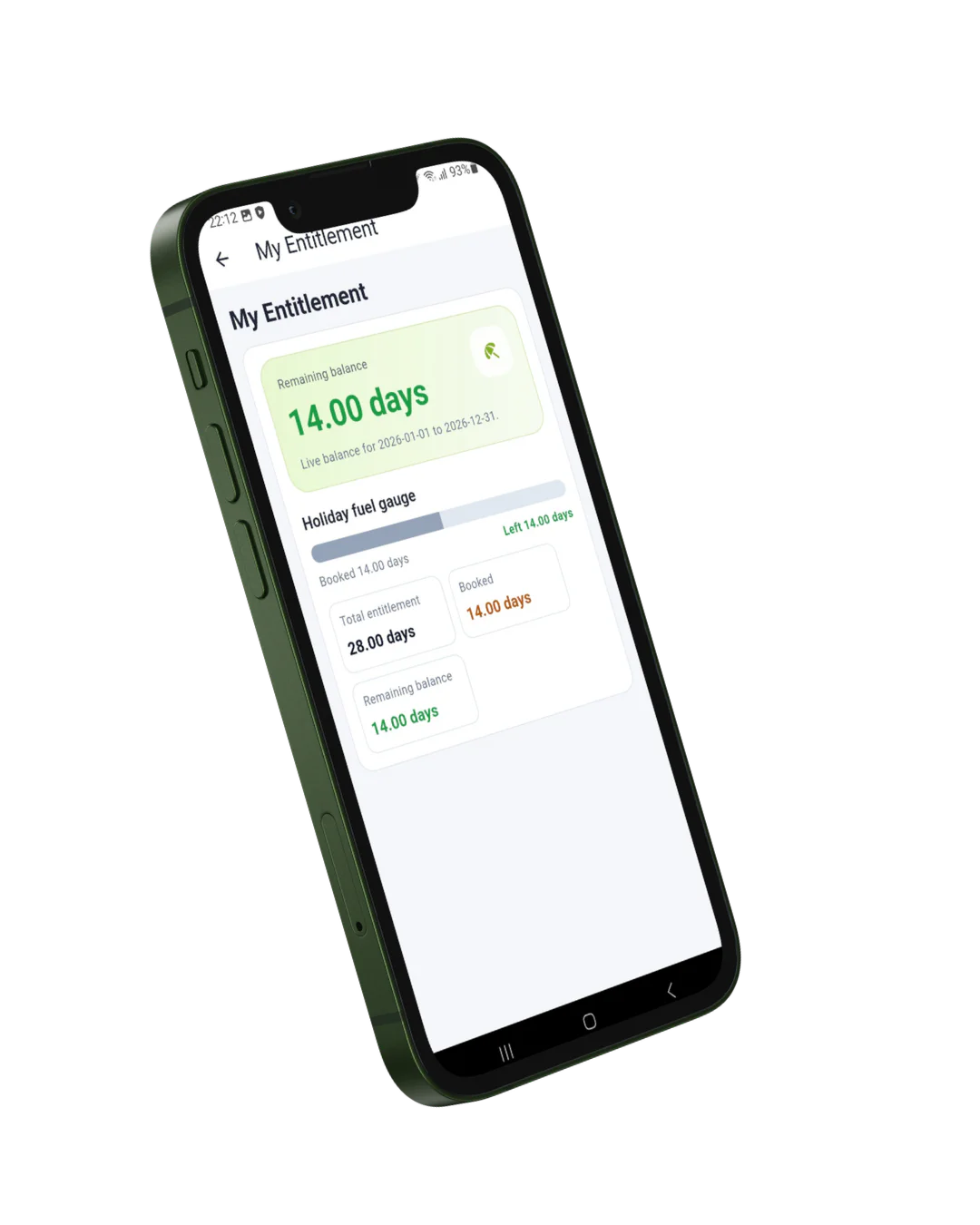
Most UK systems are priced per employee per month. Ours is £2 excl. VAT for the software, which covers reporting, entitlements and managers booking absence on an employee’s behalf, or £3 if you want employees requesting their own holiday through the
mobile app. There are no setup fees. A 50 person business pays £100 or £150 a month depending on which you choose.
Do we need a separate HR system as well?▼
Not for absence. If you also want employee records, onboarding, appraisals and document management in the same place, that is our
Realtime system rather than Syncro Connect. Plenty of businesses run absence management alongside an existing HR platform and simply export the data, and we will tell you honestly which makes more sense for your situation.
How does it handle holiday carry over and different holiday years?▼
Both are set up as part of your rules. You can cap carry over, set an expiry date for carried days, and run different holiday years for different departments if that is how your business works. Carry over is one of the most common causes of entitlement disputes, largely because spreadsheets rarely handle it consistently across a whole workforce.
Can we move our existing absence records across?▼
Usually. If your current records are in a spreadsheet or another system, opening balances and holiday taken to date can be brought in so nobody loses days on the changeover. Send us what you have before you commit and we will tell you what will transfer cleanly and what will not.
How long does it take to set up?▼
Days rather than weeks. The work is in your rules rather than the software: entitlements, carry over, holiday year, bank holidays, approval routes. We set those up with you before you go live, so the first balance an employee sees is the right one. You can also start a
free trial and have a look yourself first.
Who can see sickness records?▼
The employee, their manager and whoever you give HR access to. Colleagues can see when someone is off, because that is how the team planner prevents clashes, but not why. Health data carries stricter obligations than ordinary personal data, so restricting access is not just good practice, it is part of what UK GDPR expects. Our
data security page sets out where the data sits and who can reach it.